The year is sometime before 1998, you’re heading north on Prospect Street. On the right hand side of the road you see a rustic sign reading Woodside Cottages in front of a weathered cape cod style house set on a large wooded lot. You wonder what are the Woodside Cottages: perhaps a long ago resort, vacation rental properties, or just some family’s getaway compound? Woodside Cottages were none of the above. They were in fact a private sanatorium established by Dr. Frank Wallace Patch (1862-1923) in 1900.
Patch was born in Wayland to Captain Samuel Patch and Elizabeth J. (Noyes) Patch on March 23, 1862. After he graduated from Weston High School, he went on to medical school and earned his medical degree from The Boston University School of Medicine in 1888 (Funeral). At that time, BU School of Medicine was a homeopathic school. Homeopathy, a popular medical trend in the 19th century, is based on the founding principle that the body can cure itself. Homeopaths believed that disease is best cured by a drug that creates symptoms in a healthy person similar to the disease itself. Thus, they would use small amounts of natural substances to trigger the body’s immune system to attack the disease. Homeopaths believed that large doses of drugs would aggravate the illness. By the 20th century, the practice of homeopathic medicine fell out of favor.
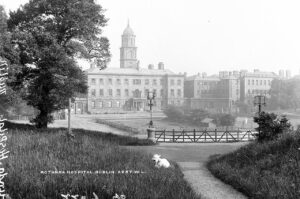
Upon completing his degree, Patch began his medical career at the Rotunda Hospital in Dublin, Ireland. The Rotunda Hospital was a maternity hospital dedicated to the care of women and infants established by Barthtolomew Mosse, a male midwife in 1745.
After finishing his studies in Dublin, Patch settled in South Framingham where he opened a medical practice. By the 1890s, Framingham was a booming center of commerce thanks in part to the railroad that ran through the town. With more people and industries, the need for a hospital to treat illness and accidents grew. In September 1890, a group of concerned Framingham citizens petitioned the General Court of the Commonwealth for permission to establish a hospital. This first hospital was opened on Winthrop Street at the Sturtevant House.
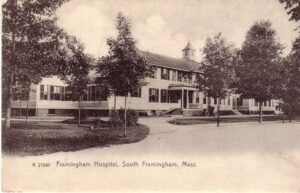
By 1894, more funds were raised and a new hospital opened on Evergreen Street. Dr. Patch was one of the physicians who formed the medical staff for the new Framingham Hospital and was the only homeopath. This physicians’ group established the hospital’s rules and regulations for the practice of medicine and even submitted a request for an X-Ray machine, a new and advanced piece of medical equipment.
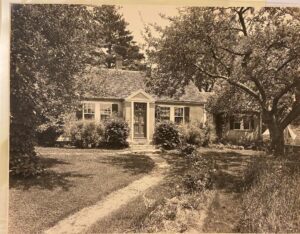
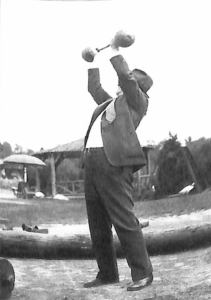
In 1900, Dr. Patch opened Woodside Cottages, a private sanatorium which offered therapeutic rest for people suffering from chronic illness such as diabetes, rheumatoid arthritis and nervous disorders, as well as senility and old age. Woodside was located on 18 acres of land on Indian Head Hill, off of Prospect Street. The Patch family left South Framingham to live on the Woodside campus in the upper house. At the start, Patch admitted just four patients who were cared for in his home. In keeping with his homeopathic training, he prescribed treatments included massage, light therapy, a healthy diet and minimal use of medicines. Fresh air, exercise, outdoor activities such as gardening and lawn games were part of the healing process. Dr. Patch’s program also included mental therapeutics such as reading, writing and crafts.
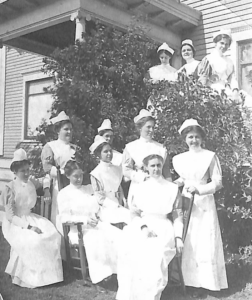
Beside tending to his patients in his private practice and at Woodside Cottages, Patch served the medical community in several other capacities over the years. He was a member of the consulting board for Westborough State Hospital, and a professor of Materia Medica (pharmacology) at Boston University School of Medicine. In 1892, he joined the International Hahnemannian Association and was elected its president in 1907. Patch was also a member of the Massachusetts Homeopathic Medical Society and its president in 1911.
Dr. Patch was also involved in civic affairs of the Framingham community. He was one of the founding members of the Framingham Improvement Association which was founded in 1901 and incorporated in 1904. The Framingham Improvement Association was formed to oversee the restoration and management of the Village Hall on the Common. The Association also undertook other projects around the Framingham Centre Common such as planting trees and shrubs, maintaining Gordon’s Corner, watering the unpaved streets to reduce dust from the automobile traffic, and collecting waste in the Centre. For several years, Patch served as President of this group.
It would be easy to assume that Dr. Patch devoted himself to only professional matters. But that was not the case. He married Kate Whiting, daughter of Frederick A. Whiting of Lowell on October 19, 1893. Their wedding was held in the parlor of the Whiting home at 166 East Merrimack Street. Kate was a writer who contributed stories, essays and poems to a variety of magazines, and also authored several books. Her books included Middleway (1897), Rainy Days and Sunny Days (1899), Old Lady and Young Laddie (1900), and Prince Yellow Top (1903) among others. The couple had four children: Buell Whiting Patch, 1899-1987, Frank Wallace Patch, Jr. 1904-1994, Frederic Whiting Patch, and Elizabeth Patch. Kate died in October 1909 after a bout of typhoid fever. Four years later on August 19, 1913, Patch married Virginia White Allen at St. Paul’s Church in Petersburg, Virginia.
On September 7, 1923, Dr. Patch died suddenly of natural causes while visiting a friend in Boston. He was sixty years old. After his death, Patch’s children took over running Woodside Cottages. In 1926, Dr. Franklin C. Southworth was appointed superintendent at Woodside Cottages. After Dr. Southworth‘s resignation due to professional differences with the Patch family, Dr. Arthur Ward was hired to be the medical director, a position he held for the next twenty-five years. By the time Dr. Ward was seventy-seven, the Patch family realized that they would need to begin the search for another psychiatrist. At this time, Dr. Benjamin F. MacDonald had just completed his residency at the Institute for Living in Hartford, Connecticut and applied for the position. In January 1961, the family sold the hospital to Dr. MacDonald. Woodside Cottages remained in business until 1976, when the state shut it down for failing to meet building codes. The property was redeveloped into a residential neighborhood in the late 1990s. In homage to Dr. Patch’s hospital, the main street in this neighborhood was named Woodside Cottage Way.
Did You Know?
- According to the Town of Framingham list of residents, Patch lived at 72 Concord St. between 1891-92 and at 58 Union Ave. in 1895.
- The International Hahnemannian Association, founded in 1880, was the oldest homeopathic organization. It disbanded in the late 1950s.
- Founding members of the Framingham Improvement Association were: Dr. Patch, Frederic A. Whiting, Mrs. E. F. Bowditch, Frank A. Kendall, Charles M. Baker and Hartley Dennett. In 1904 Frederick B. Horne, Adnah Neyhart, Enos Bigelow, John Temple, Lucius Eastman, Charles Macomber, William Gregory, and N. I. Bowditch joined the Association (Davidson)
- Dr. Patch published The Woodside Cookbook in 1905, a compilation of vegetarian recipes for healthy living.
- When Dr. Patch built the Doctor’s cottage, he did not include a kitchen as meals were to be eaten with the patients.
Bibliography
Davidson, Martha W. “The Framingham Improvement Association.” Framingham History.
Fall 2005. p. 4-5. Newsletter.
“DR PATCH OF FRAMINGHAM DIES SUDDENLY IN BOSTON.” Boston Daily Globe
(1923-1927), 08 Sept. 1923, pp. 11. ProQuest, https://ezproxy.bpl.org/login?url=https://www.proquest.com/historical-newspapers/dr-patch-framingham-dies-suddenly-boston/docview/497509158/se-2. Accessed 20 Mar. 2025.
“Frank Wallace Patch, M.D. [obituary]. New England Journal of Medicine , Boston Med. Surg. 20
Sept. 1923. Vol. 189 no, 12, p. 423. https://www.nejm.org/doi/abs/10.1056/NEJM192309201891218
accessed 29 Sep. 2024.
“FUNERAL TOMORROW OF DR FRANK W. PATCH: WELL-KNOWN BOSTON AND
FRAMINGHAM PHYSICIAN.” Boston Daily Globe (1923-1927), Sep 09, 1923
“The History of the Rotunda Hospital, Dublin. The Rotunda Hospital, Dublin. c2024.
https://rotunda.ie/history-of-rotunda-hospital/ accessed 29 Sept. 2024.
“Improvement Assn, Organized in 1906.” Framingham News 25 Feb. 1959.
International Hahnemannian Association. Proceedings of the Twenty-seventh Annual Session of the International Hahnemannian Association. The Association,
- https://play.google.com/store/books/details?id=Ee-fAAAAMAAJ&rdid=book-Ee-fAAAAMAAJ&rdot=1&pli=1 accessed 13 Apr. 2025
Kate Whiting Patch : Obituary. Lowell Courier Citizen Evening. Oct. 12, 1909 p.10 Newspaper Archive.
“Local News: Patch-Whiting.” Lowell Sun. 20 Oct. 1893 p. 16 Newspaper Archive,
https://access-newspaperarchive-com.ezproxy.bpl.org/us/massachusetts/lowell/lowell-sun/1893/10-20/page-16 accessed 21 Nov, 2024.
MacDonald, B. F. “History of Woodside Cottages, 1905-1976.” 1997.
[Manuscript].
Marian, Sara and Clio Admin. “Village Hall-Framingham History Center.” Clio: Your Guide to
History. June 17, 2016. https://theclio.com/entry/23674 accessed 10 Nov. 2024.
“Marriages: Patch-Allen.” Boston Post Newspaper. Aug. 22, 1913 p. 14 Newspaper Archive.
https://access-newspaperarchive-com.ezproxy.bpl.org/us/massachusetts/boston/boston-post/1913/08-22/page-14 accessed 21 Nov. 2024.
“Our History: Framingham Union Hospital.” MetroWest Medical Center.
https://www.mwmc.com/about/our-history accessed 10 Nov. 2024.
Who’s Who is New England, Albert Nelson Marquis, editor 2nd ed. Chicago: A. N.
Marquis & Co. 1916.
https://books.google.com/books?id=RmUTAAAAYAAJ&q=frank+wallace+patch%5D#v=snippet&q=frank%20wallace%20patch%5D&f=false accessed 21 Nov, 2024.
“Woodside Cottages in Expansion Program.” Framingham News 11 Aug. 1965.